 Spray foam insulation · made by Purinova
Three foams, three jobs. Purios F is the soft, breathable open-cell grade for attics and timber frame. Purios H is rigid closed-cell at λ 0.0224 W/m·K — the target U‑value in a thinner build-up. Purios HR is the dense roofing grade that goes on roofs and takes the weather. Duratite is the distributor in Ireland.
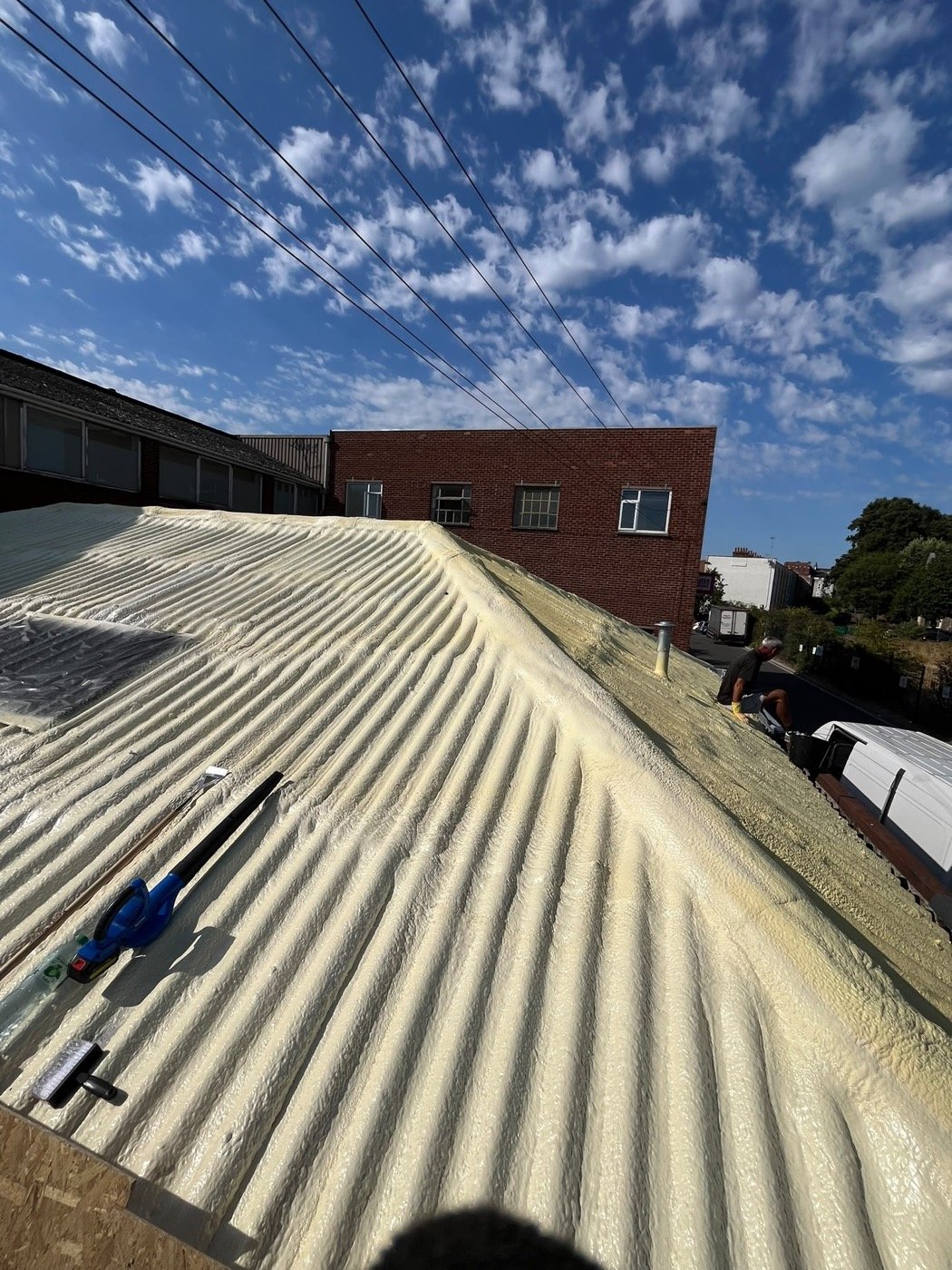 Spray-applied · self-bonding
Sprayed as a liquid, it expands into the shape it is given and cures bonded to the substrate. That single property is where every practical advantage comes from.
The foam grips the substrate as it cures. No fixings, no penetrations, no rails running cold straight through the insulation line. On an asbestos-cement roof that is not a convenience, it is the whole point — a fixing means penetrating the material being contained.
It fills the gaps a board cannot be cut to fit — corrugations, rafter junctions, service penetrations, awkward voids. The insulation layer and the air barrier are the same material, applied at the same time.
Curved shells, arched huts, cylindrical tanks, piling voids, container ribs. Anywhere a rigid board would need cutting, packing and taping, the foam simply goes on and takes the shape.
The closed-cell grades cure rigid — 200 kPa for Purios H, 300 kPa for HR — and stiffen the element they bond to, while resisting liquid water and vapour. Open-cell stays soft and deliberately vapour-open instead.
Picking the wrong one is the most common and most expensive mistake in spray foam. Open cell and closed cell are not interchangeable.
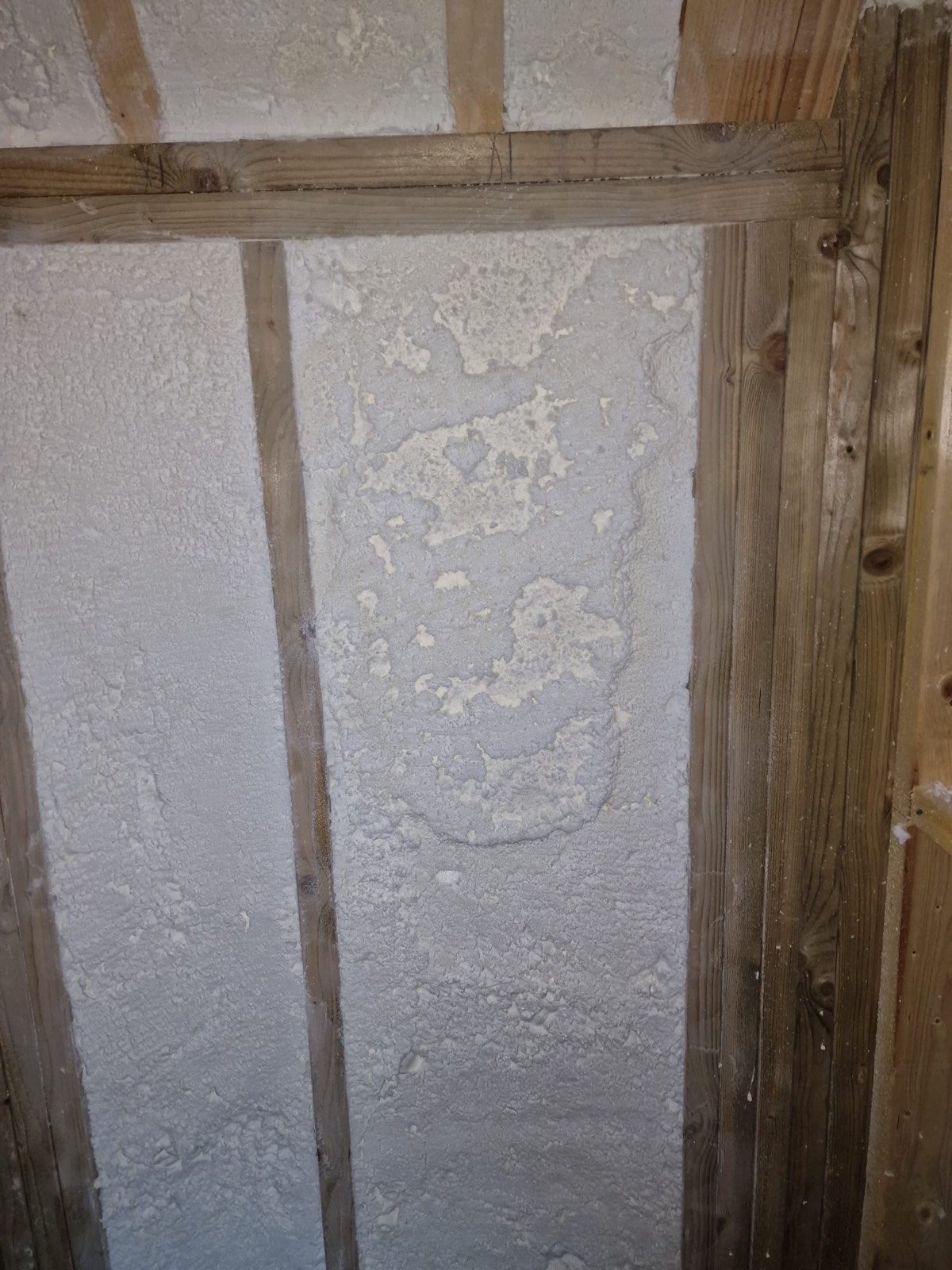
Sprayed as a liquid, expands roughly a hundred times to fill every gap and awkward void, then cures soft and light at 9–12 kg/m³. With 90–95% open cells and µ ≥ 5 it stays vapour-open, so moisture diffuses through the build-up rather than being trapped against the structure.
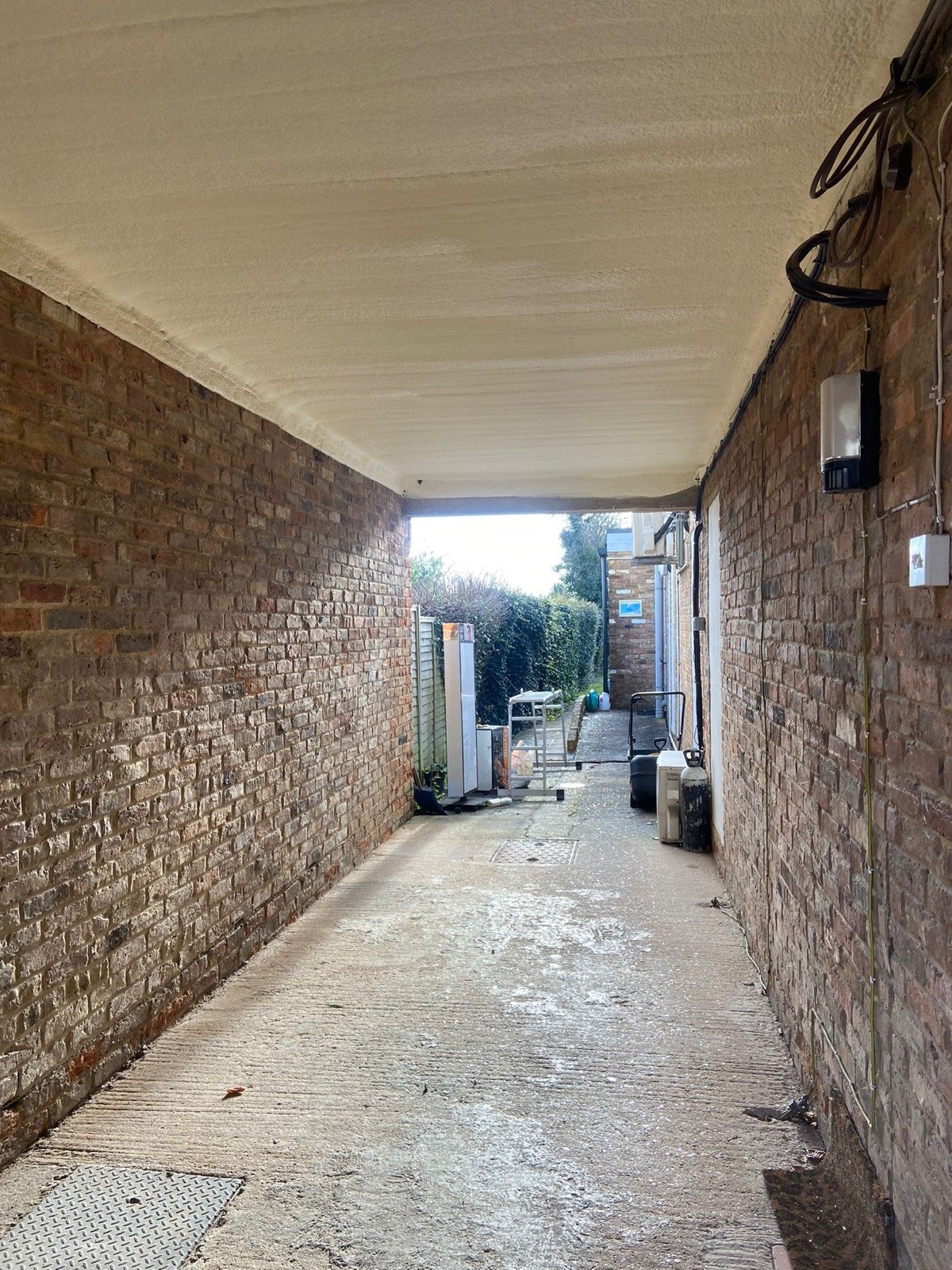
The low-λ grade. At 0.0224 W/m·K it reaches a target U‑value in a noticeably thinner build-up, which is what you want when depth is tight. Cures rigid at 35–40 kg/m³ and stiffens the element it bonds to.
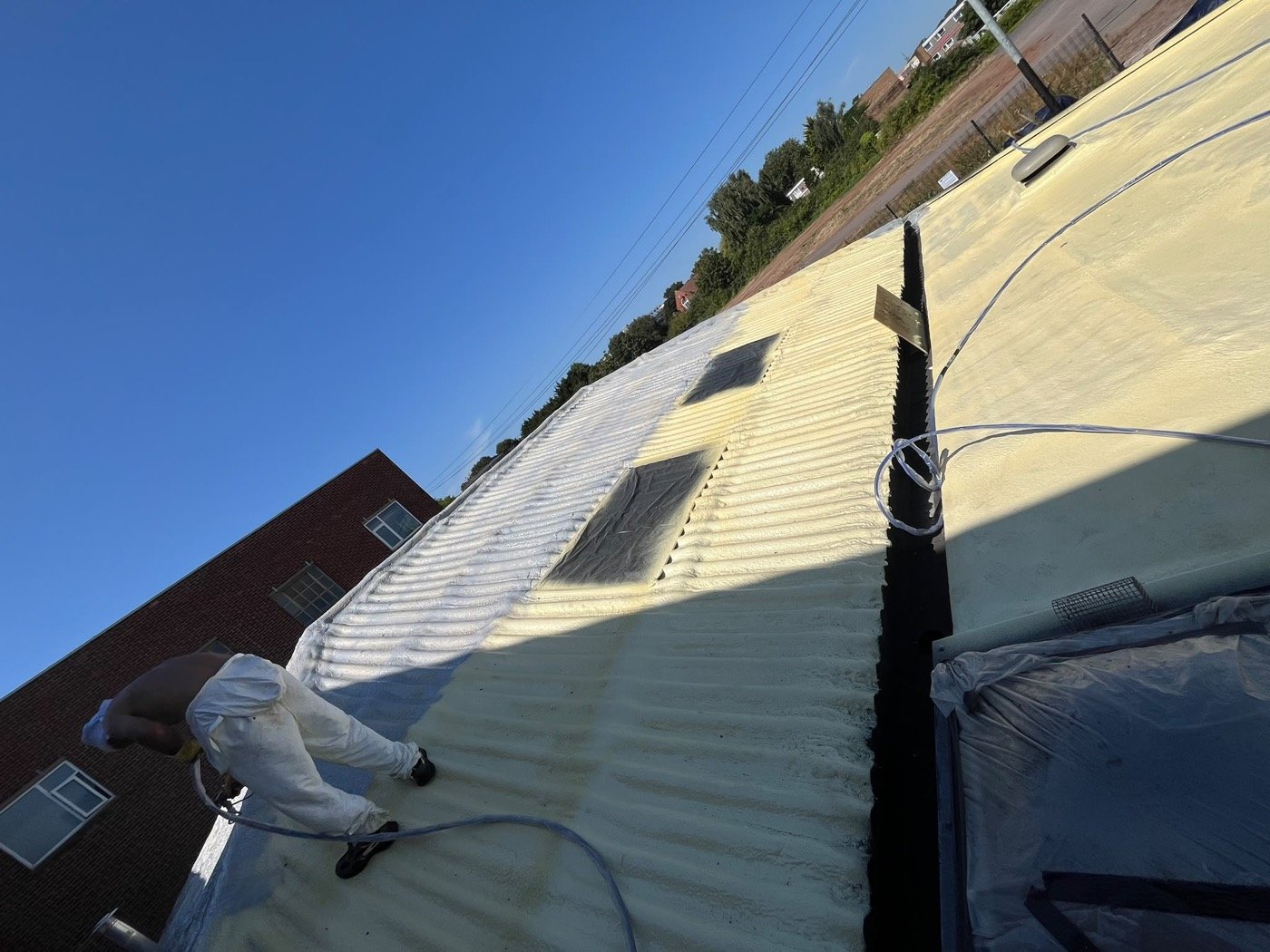
The roofing grade, and the densest of the three at a minimum of 50 kg/m³. Built to sit on a roof: 300 kPa compressive, the lowest water absorption in the range, and applied in thin 10–20 mm passes so it follows a corrugated profile cleanly.
Purios is manufactured by Purinova Sp. z o.o. in Bydgoszcz, Poland. Duratite is the distributor in Ireland — which is a job, not a label.
Most of the value is in the first ten minutes. Open cell or closed cell is a moisture decision, not a warmth decision, and it is the one that cannot be corrected later by adding thickness.
Send the build-up and the areas and you get the grade, the thickness and the number of sets back — with the arithmetic shown, not a lump figure to take on trust.
A material warranty from Duratite, issued against the manufacturer’s declared performance and travelling with the foam to whoever applies it.
Foam is unforgiving of bad application. Trade accounts get technical support, the record sheets, and a named person to call when a detail on site is not covered by the data sheet.
The manufacturer’s published characteristics, in one table. Read the vapour resistance row first — it is the one that decides whether a foam belongs in your build-up at all.
| Property | Purios F — open cell | Purios H — closed cell | Purios HR — roofing |
|---|---|---|---|
| Thermal conductivity λ | 0.0344 W/m·K mean declared λD 0.036 | 0.0224 W/m·K | 0.0233 W/m·K |
| Density, finished foam | 9–12 kg/m³ | 35–40 kg/m³ | min 50 kg/m³ |
| Cell structure | 90–95% open | ≥ 90% closed | min 90% closed |
| Vapour diffusion resistance µ | ≥ 5 — breathable | ≥ 46 — resistant | ≥ 54 — resistant |
| Compressive strength at 10% strain | ≥ 10 kPa | ≥ 200 kPa | ≥ 300 kPa |
| Water absorption | — | ≤ 0.29 kg/m² | ≤ 0.14 kg/m² |
| Applied layer per pass | 60–100 mm | 10–25 mm | 10–20 mm |
| Reaction to fire | Euroclass F · B-s1,d0 EN 13501-1, EN 13823 | Euroclass E EN 13501-1 | Declared to EN 14315-1:2013 |
| Declaration of Performance | 15-CPR305-2018 TDS 10/2018 | 36-CPR305-2024 TDS 20/2023 | Supplied with the order |
| Set yield | By take-off | ~10,000 m² × mm 100 m² at 100 mm | ~7,500 m² × mm 300 m² at 25 mm |
| Best for | Attics, rafters, internal walls, timber frame | Walls, floors, foundations, terraces | Roofs, over-roofing, asbestos encapsulation |
The grade most commercial specifications land on, and why.
This is a moisture decision before it is a thermal one. Thickness can fix a U‑value. Nothing fixes the wrong vapour behaviour in the wrong place.
The jobs it gets specified for, and the grade that does each one. Anything with a curve, a corrugation or an awkward junction is where sprayed foam stops competing with boards and starts beating them.
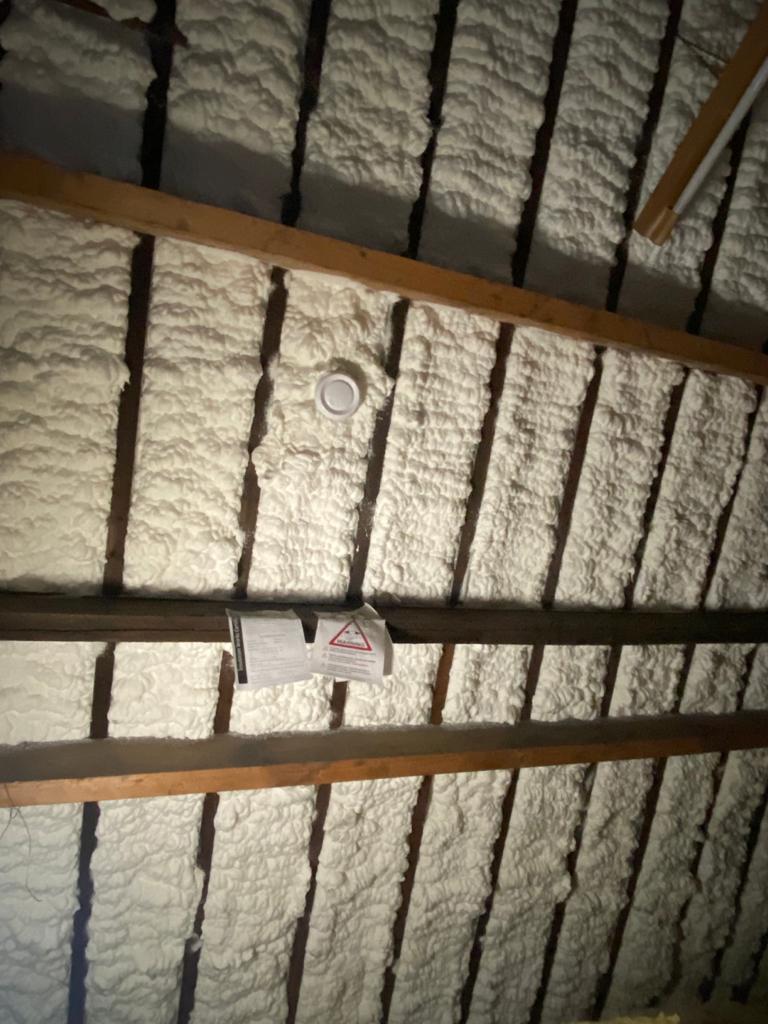
Sprayed to the underside of the roof for a warm, sealed attic, following every rafter and closing the air leaks a roll of mineral wool cannot reach. A typical attic goes in around a day.
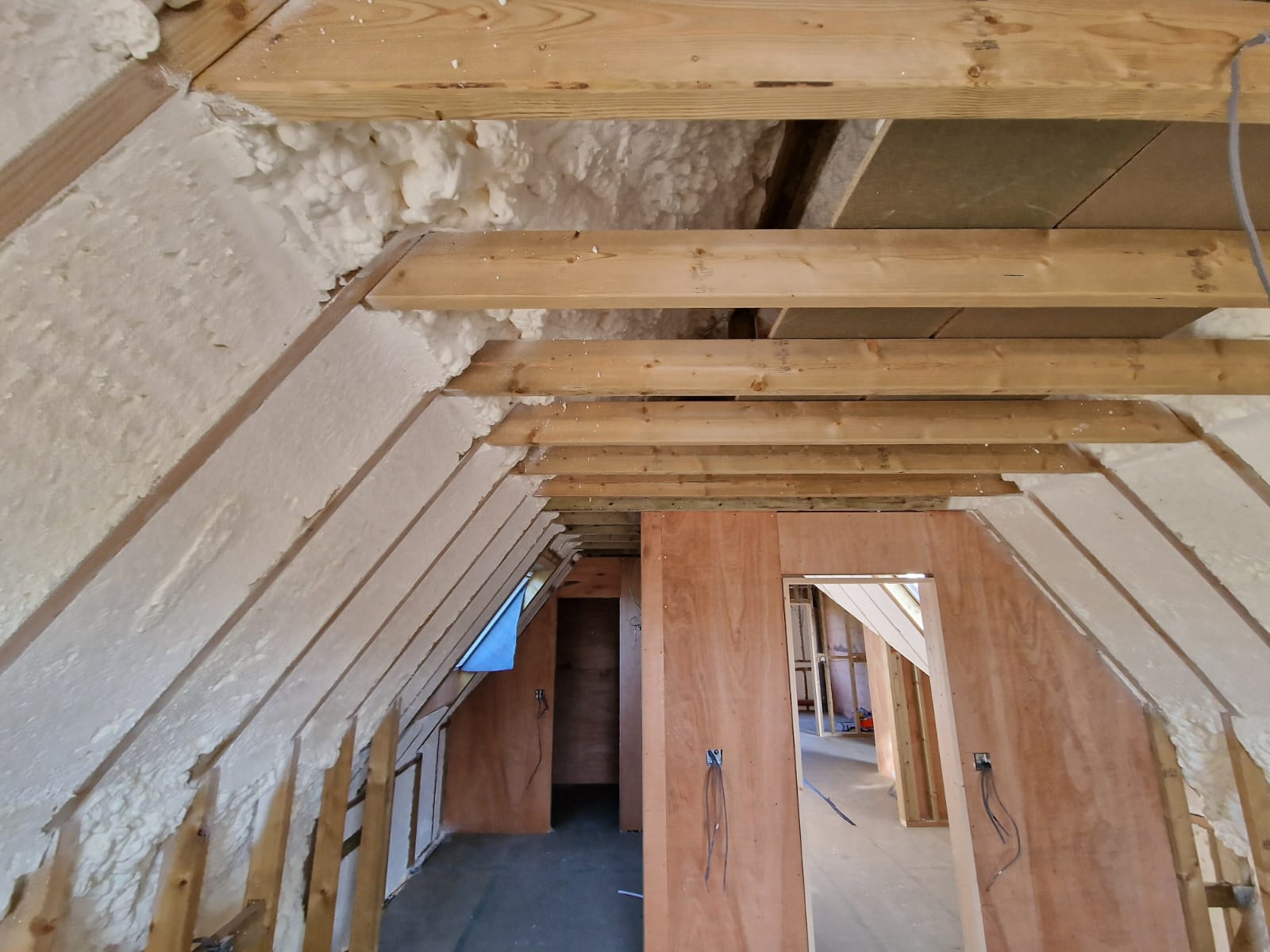
Fills the stud cavity completely and self-bonds to the frame, giving airtightness and a continuous thermal layer with no boards to cut and no fixings to fit.
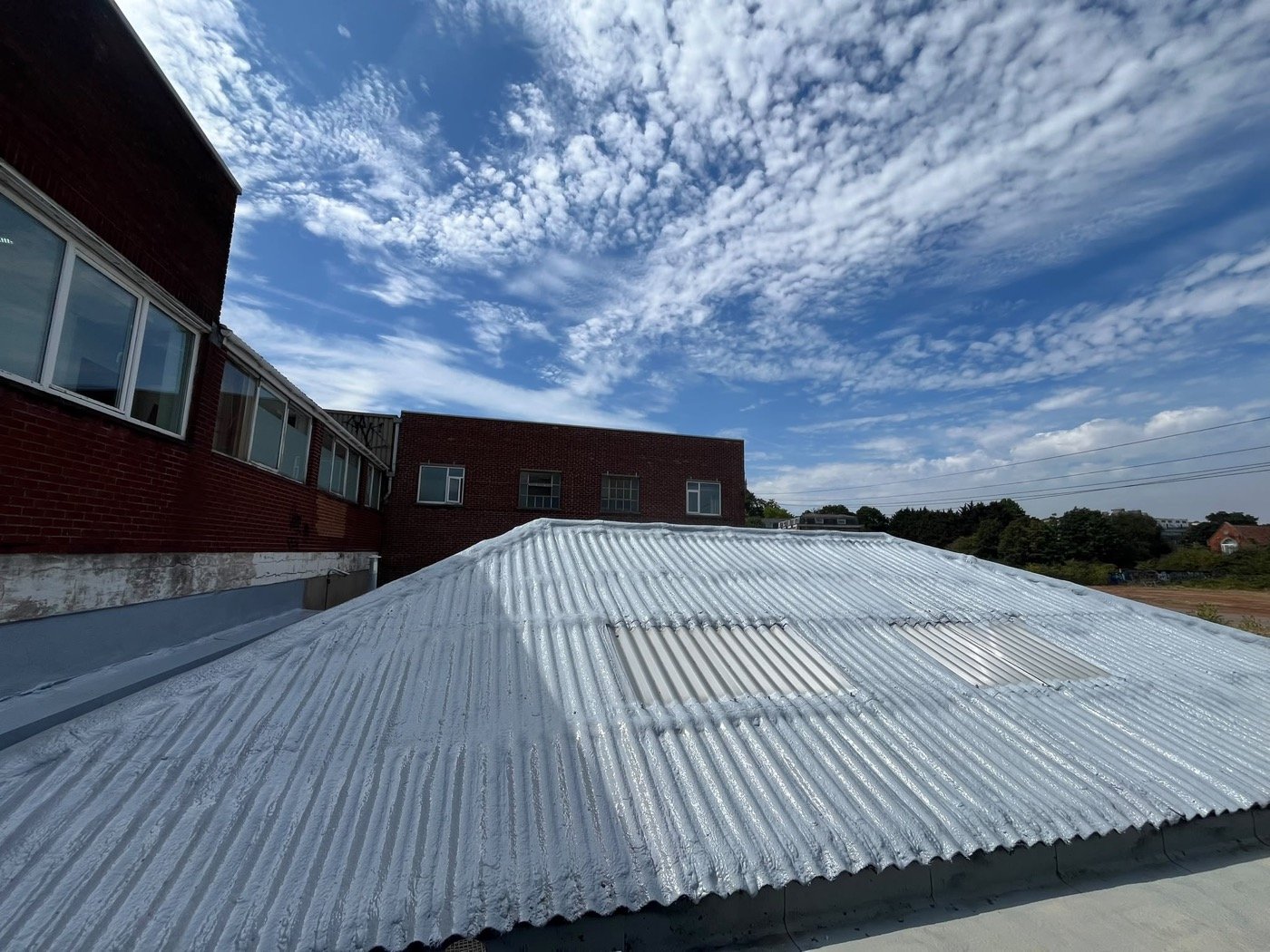
Sprayed over a corrugated asbestos-cement roof, self-bonding to the profile with no fixings — which matters when a fixing means penetrating the very material being contained.
Eighteen building types we specify Purios into, and which grade normally suits each.
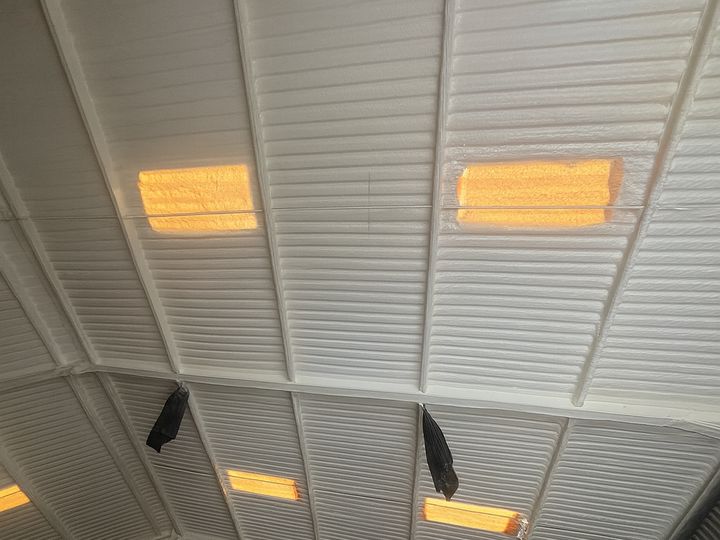 H or HR Warehouses & factoriesCold roofs, condensation, draughts and heat loss across large spans.
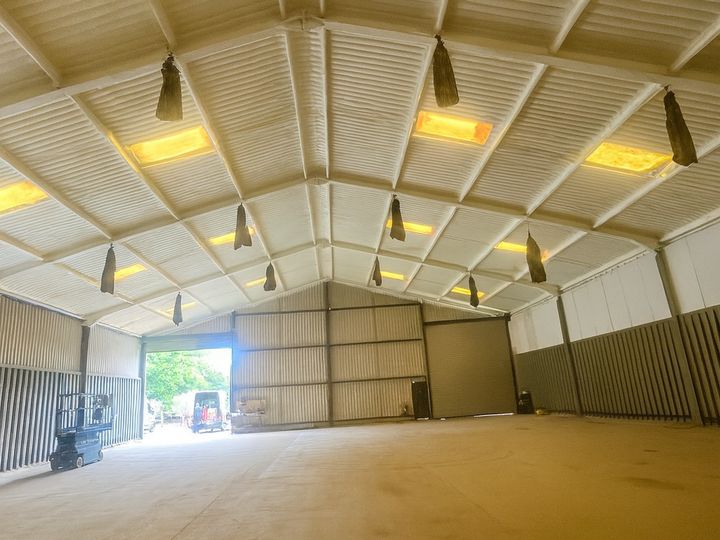 HR · 25–30 mm Anti-condensation on metal roofsStops the drip onto stock, machinery, animals and working areas.
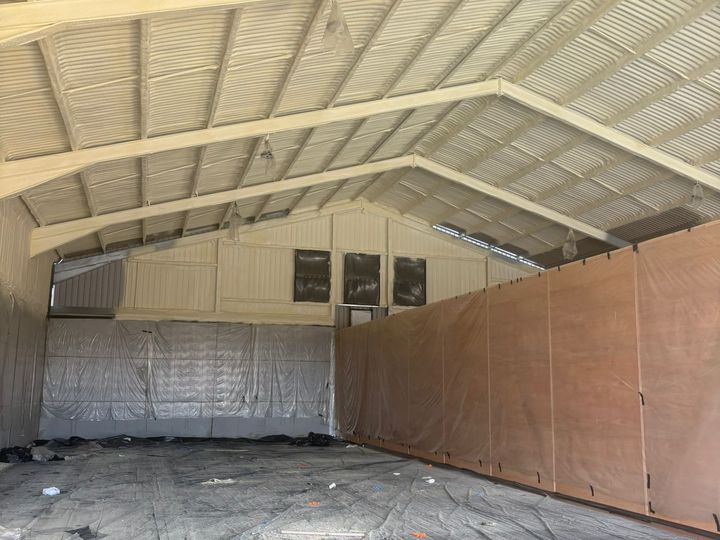 HR Corrugated roofsMetal or fibre-cement, where boards leave gaps and the profile defeats them.
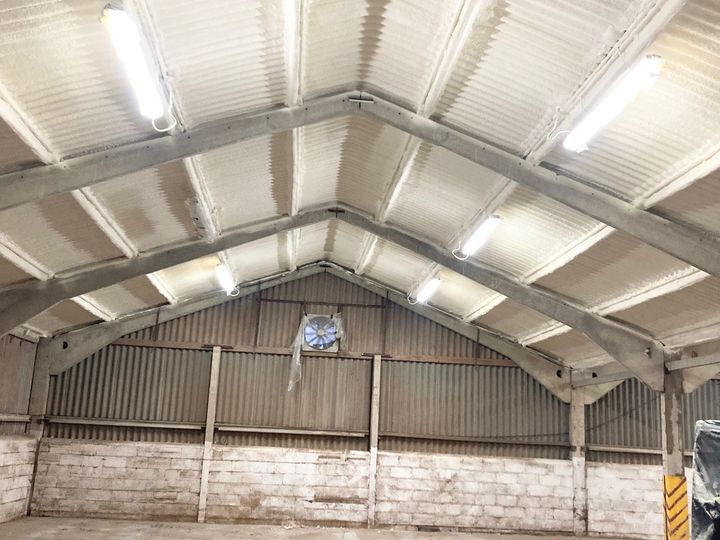 HR Asbestos-cement roofsEncapsulation without lifting a sheet — no fixings through the material.
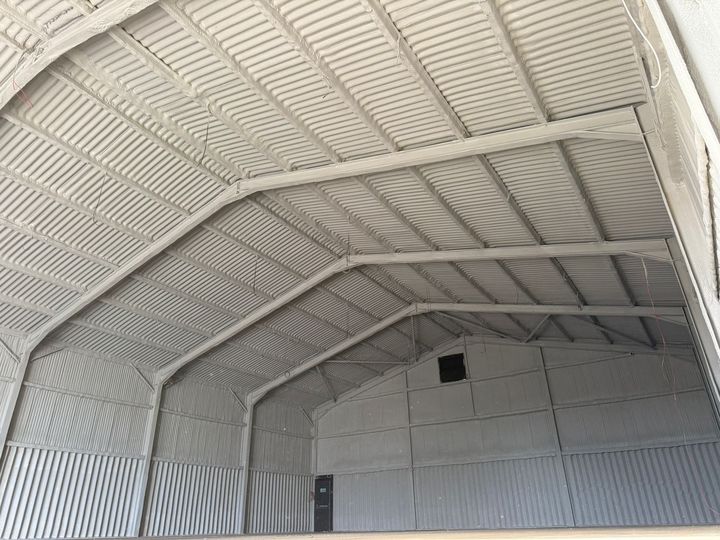 HR Agricultural buildingsSheds, barns and stores where condensation and cold sheets spoil storage.
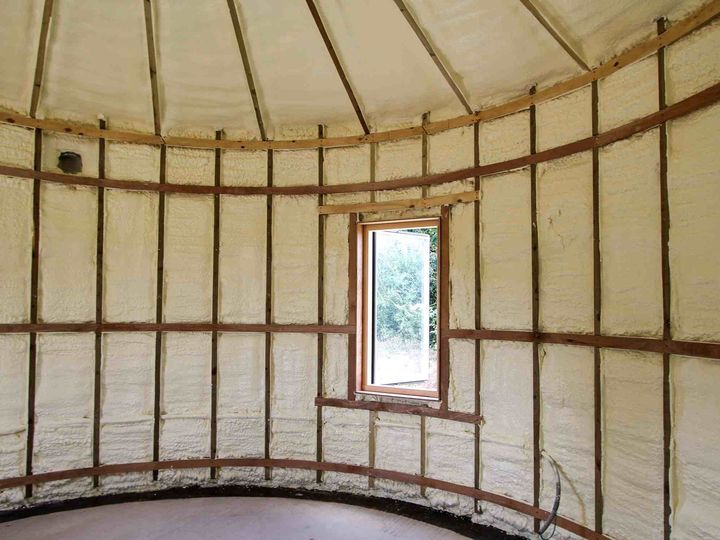 H or HR Grain silos & feed storesCurved, hard-to-board structures with real temperature swing.
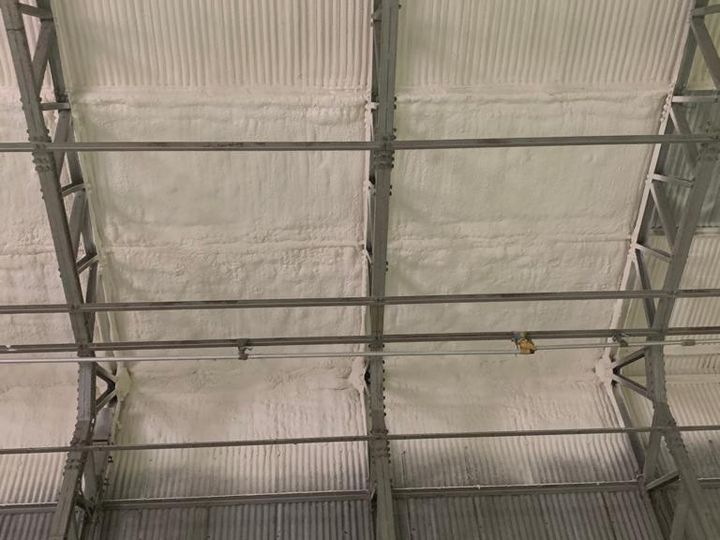 HR Hangars & large-span roofsAircraft and maintenance buildings where access has to be planned.
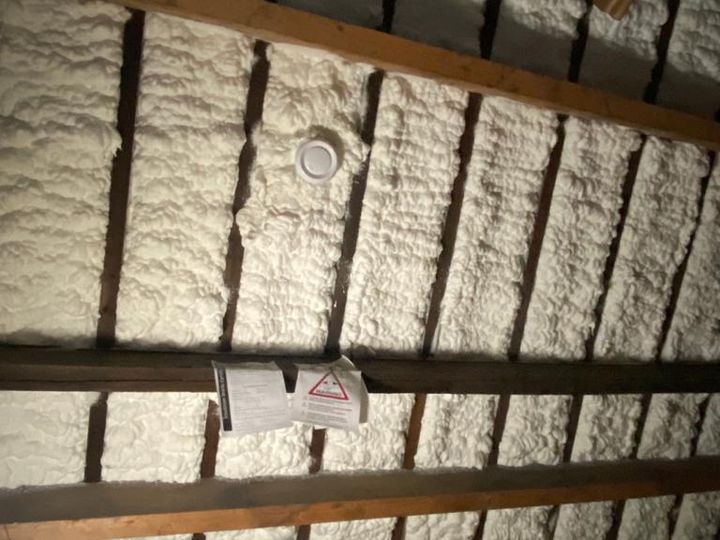 F Pitched roofs & atticsDraughts, heat loss and awkward roof geometry between the rafters.
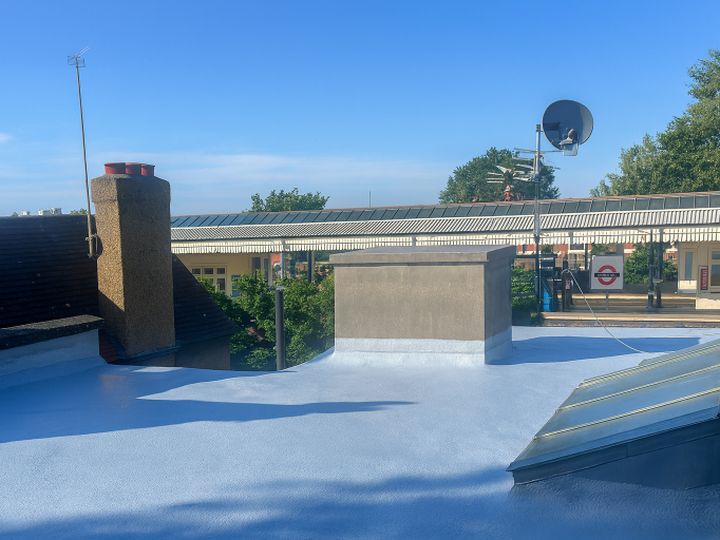 HR Flat & low-pitch roofsFoam to the falls, then a liquid membrane over the top of it.
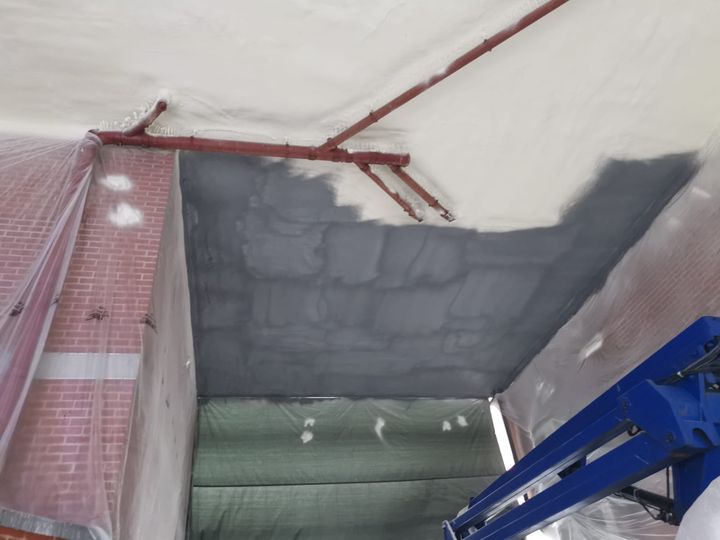 H · fire strategy first Soffits & podium decksExposed floors, car park soffits and cold-bridge details.
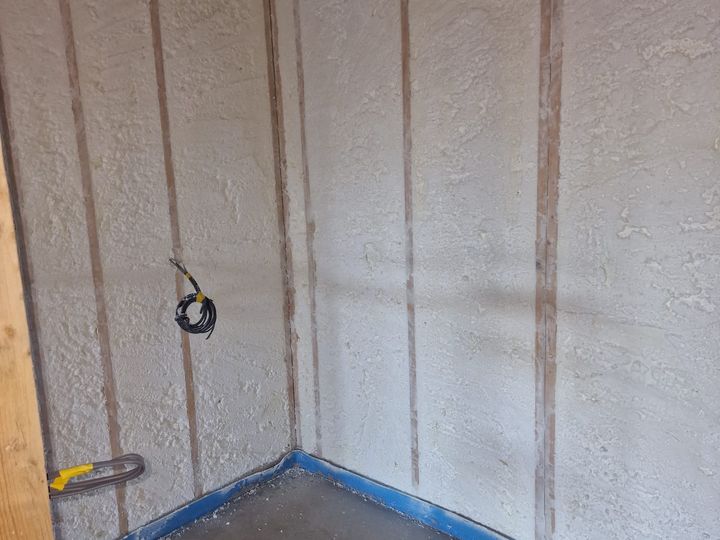 F Stud walls & partitionsA continuous sprayed layer through open frames and difficult cavities.
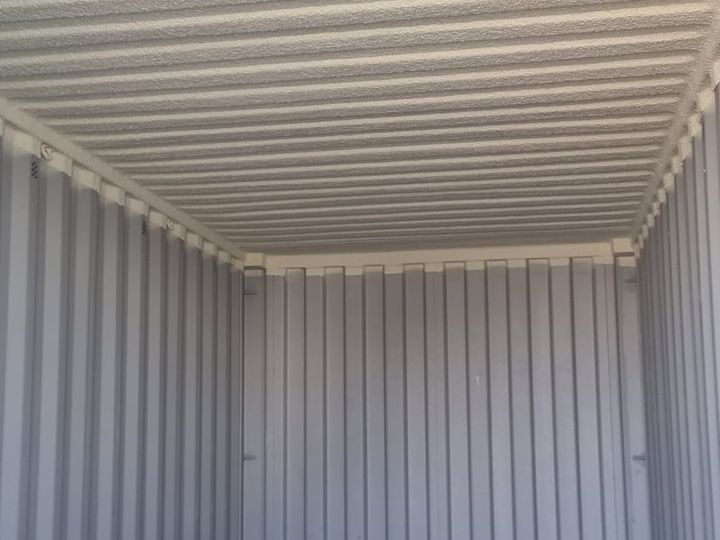 H · 25 mm Shipping containersConversions, storage, workshops and site offices — corrugated steel, no depth.
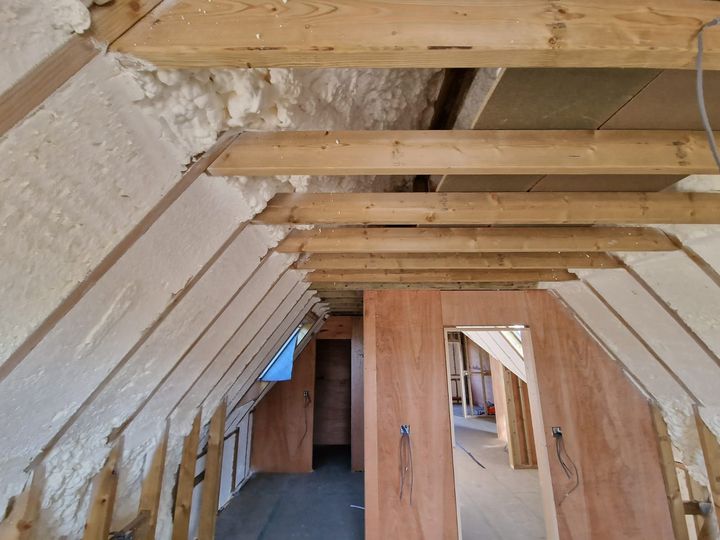 H Modular & off-site unitsCabins and pods needing repeatable detailing and airtightness.
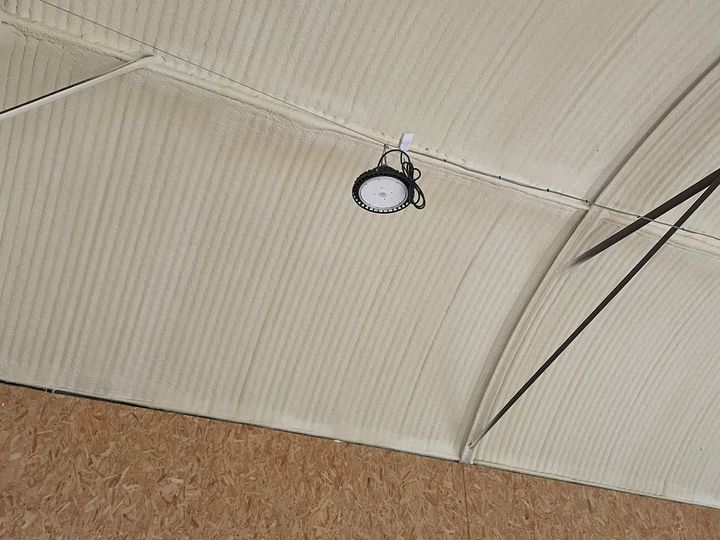 H or HR Nissen & Quonset hutsCurved corrugated shells that no board was ever going to fit.
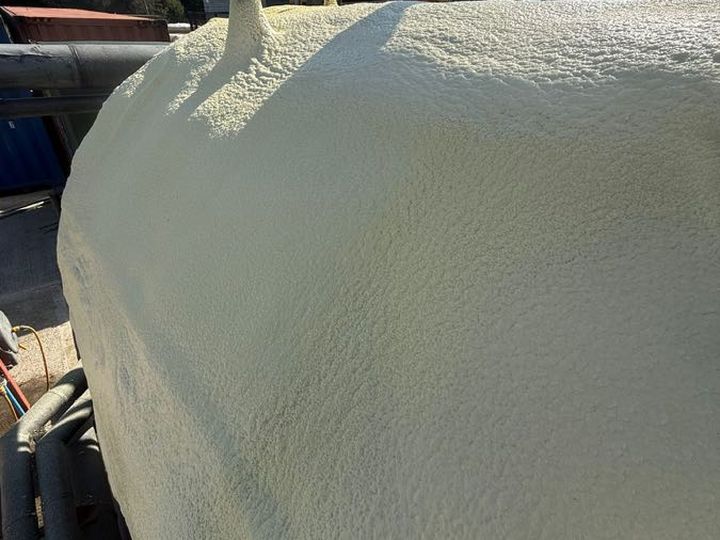 H Tanks & vesselsCylindrical and awkward surfaces resisting condensation and temperature swing.
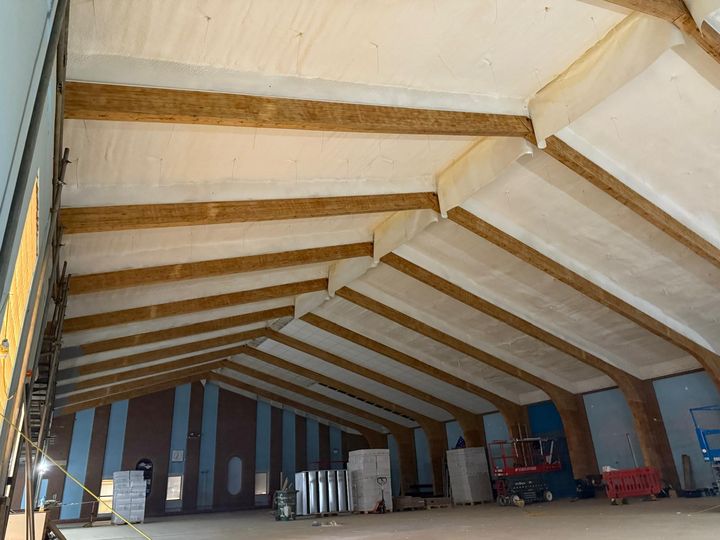 H · survey critical Swimming pool hallsHumid leisure spaces where moisture control needs careful survey.
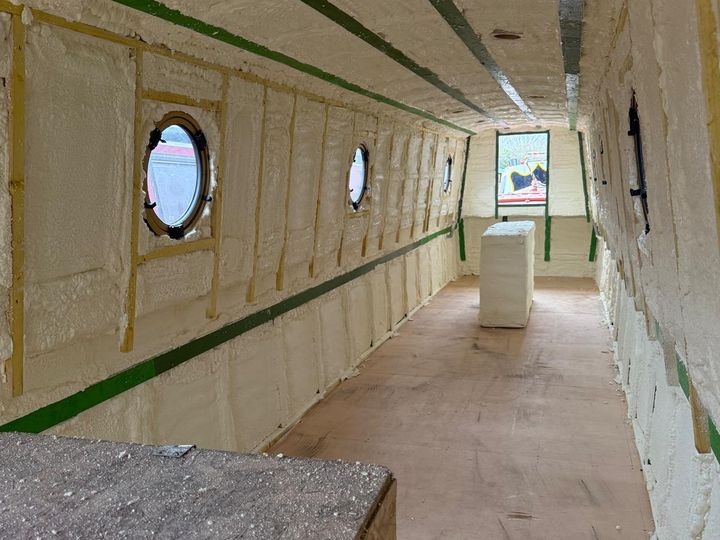 H Boats & marineSteel hulls, cabins and conversions — curves, condensation, no space.
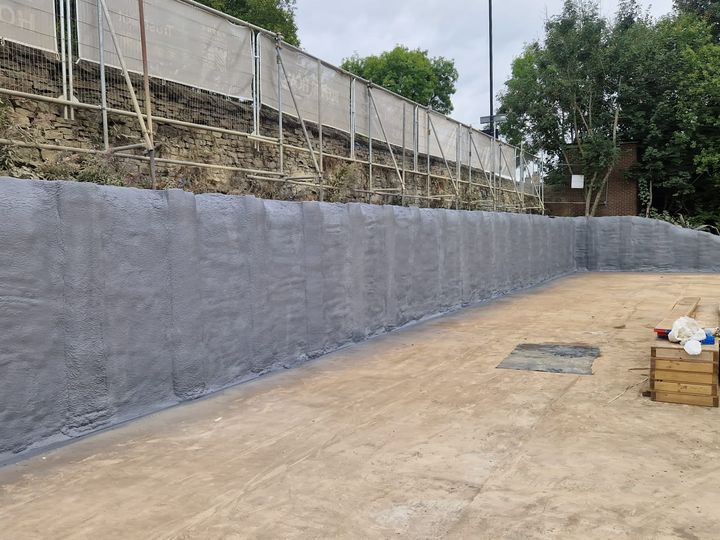 H · never F Piling & below groundContiguous and sheet piling infilled with foam rather than shotcrete.
Grade, area and thickness in — sets and an indicative U‑value out, with the arithmetic shown.
Indicative, for the foam layer plus standard surface resistances. Note how much thinner the closed-cell grades get to the same number — that is the whole argument for Purios H where depth is tight.
| Thickness | Purios F · λ 0.036 | Purios H · λ 0.0224 | Purios HR · λ 0.0233 |
|---|---|---|---|
| 25 mm | 1.18 W/m²K | 0.79 W/m²K | 0.82 W/m²K |
| 50 mm | 0.65 W/m²K | 0.42 W/m²K | 0.44 W/m²K |
| 75 mm | 0.45 W/m²K | 0.29 W/m²K | 0.30 W/m²K |
| 100 mm | 0.34 W/m²K | 0.22 W/m²K | 0.23 W/m²K |
| 150 mm | 0.23 W/m²K | 0.15 W/m²K | 0.15 W/m²K |
| 200 mm | 0.18 W/m²K | 0.11 W/m²K | 0.11 W/m²K |
Spray foam attracts more certification confusion than any other product we sell, so here is the position in plain terms.
Six stages. The records taken at stage five are what the warranty rests on — not the invoice.
Substrate, moisture, existing build-up, access and the target U‑value. This is what decides grade and thickness — everything after it is execution.
Grade, thickness, take-off and, where it applies, the fire and moisture strategy. Written down, with the arithmetic shown.
Clean, dry, sound substrate. Biocidal clean where there is growth. Rooflights, services and plant masked off before anything is sprayed.
Built up in controlled passes to the specified depth — 10–20 mm for HR, 10–25 mm for H, 60–100 mm for F. On a profile you work to the crown, not the trough.
Depth gauged and logged, substrate and ambient temperature and RH logged, batch numbers captured, photo record taken. No records, no warranty.
DC315 thermal barrier where the fire strategy requires it, or a UV-stable coating where the foam is left exposed to weather.
Purios is sold to contractors. You buy the material from us and apply it yourself, so there is one warranty on the table — and it is worth knowing exactly what makes it stand up.
It covers the product — the foam itself, against the manufacturer’s declared performance. It travels with the material to whoever applies it, which on a Purios job is you or your applicator.
Duratite · CRO 821494
A warranty is only ever as good as the record behind it. Four things decide whether a claim stands up, and all four are captured on site while the job runs:
Foam applied outside its stated conditions is the single most common reason a claim fails. If you want the record sheets we use, ask and we will send them.
Three Duratite projects, all closed-cell, all finished and handed over.
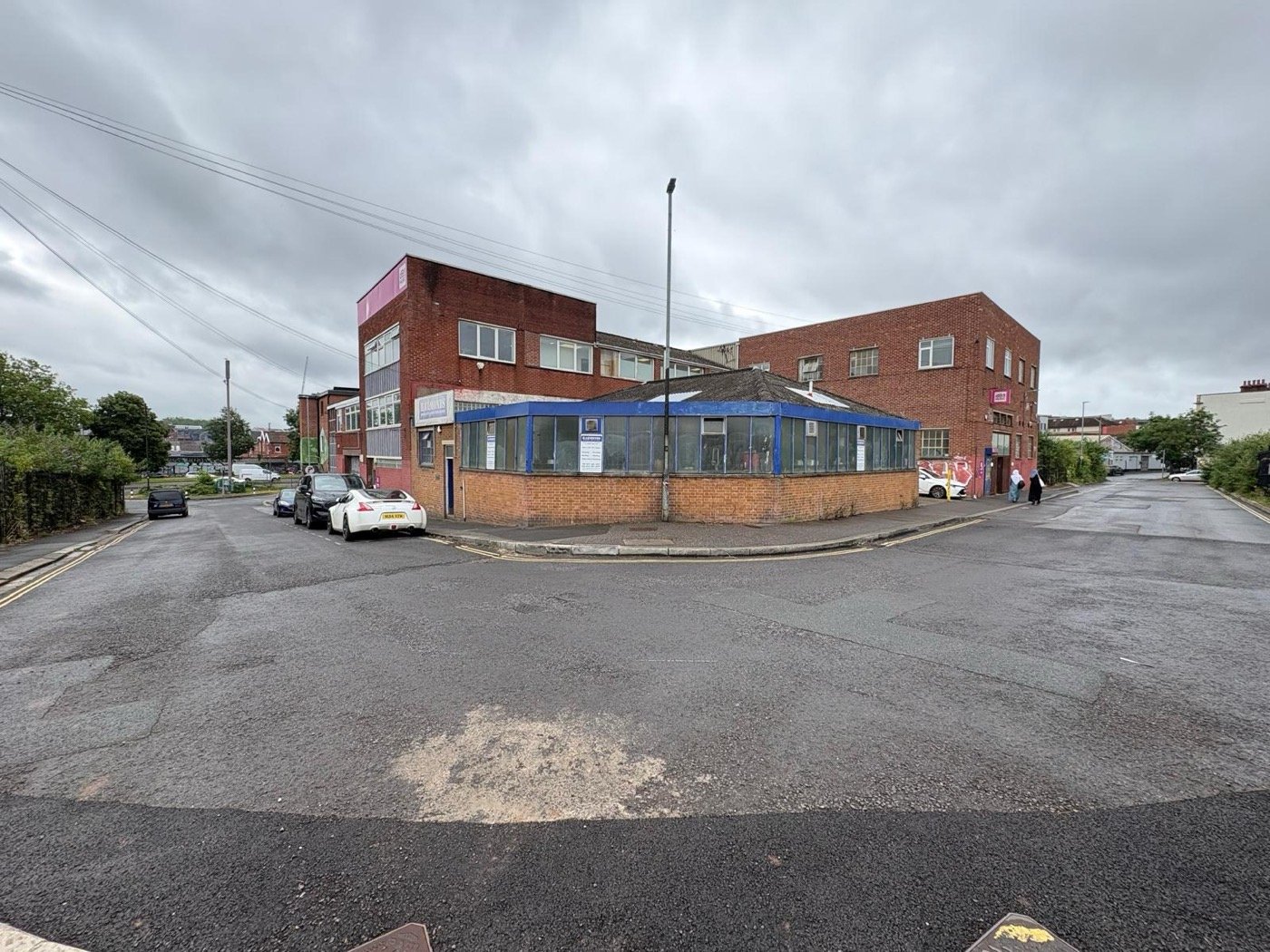
Asbestos-cement roof encapsulated at 25 mm across a pitched corrugated roof and a bitumen flat roof, then a liquid membrane and a UV-stable top coat. Not a single sheet cut, lifted or broken — no licensed removal, no controlled waste stream, and the occupier traded throughout.
Read the case study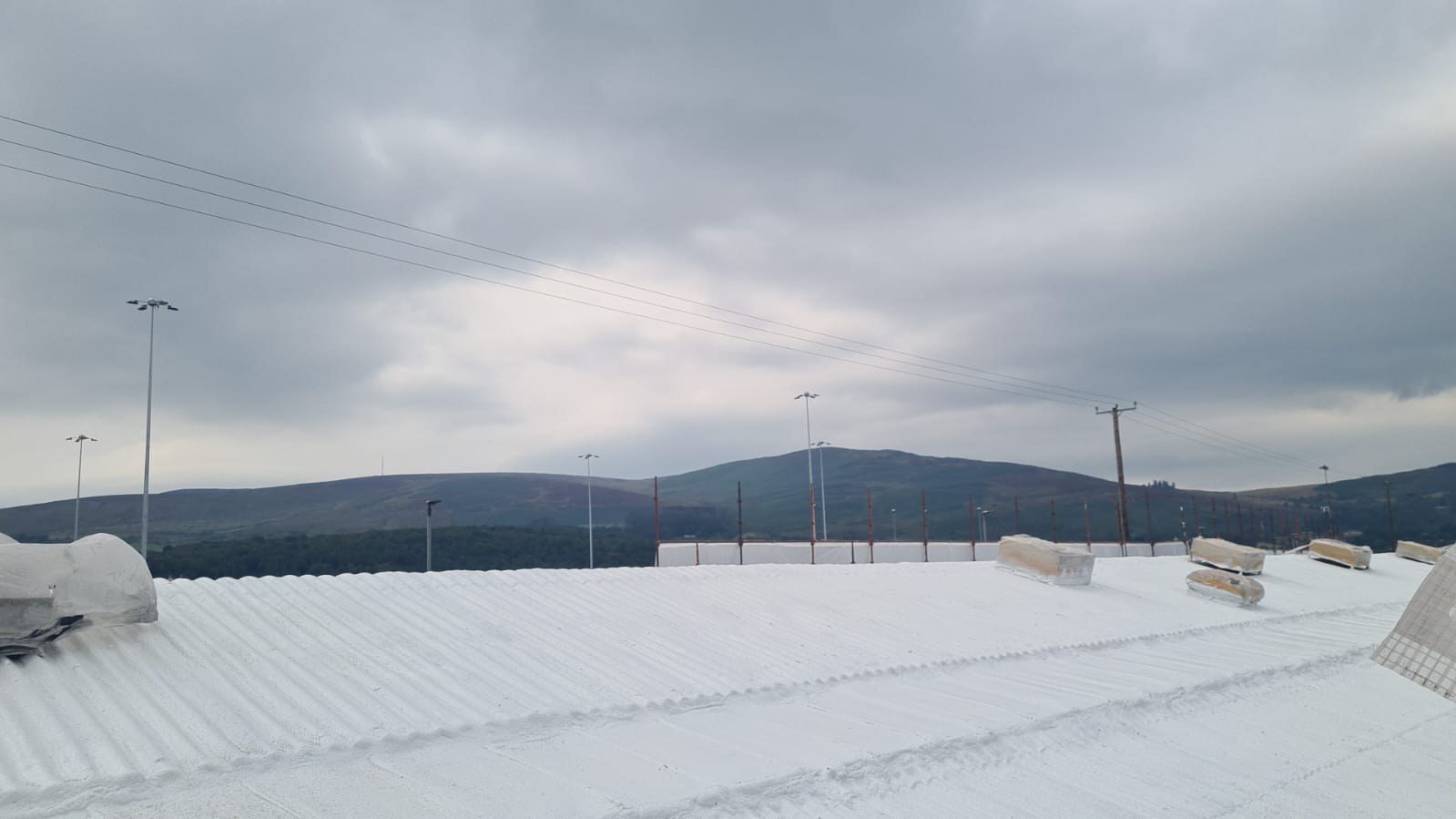
1,090 m² of a 7,330 m² industrial site. Closed-cell roofing foam at 30–35 mm over asbestos cement, followed by an aromatic base coat and an aliphatic top coat — the heaviest Purios HR job we have supplied to date.
Read the case study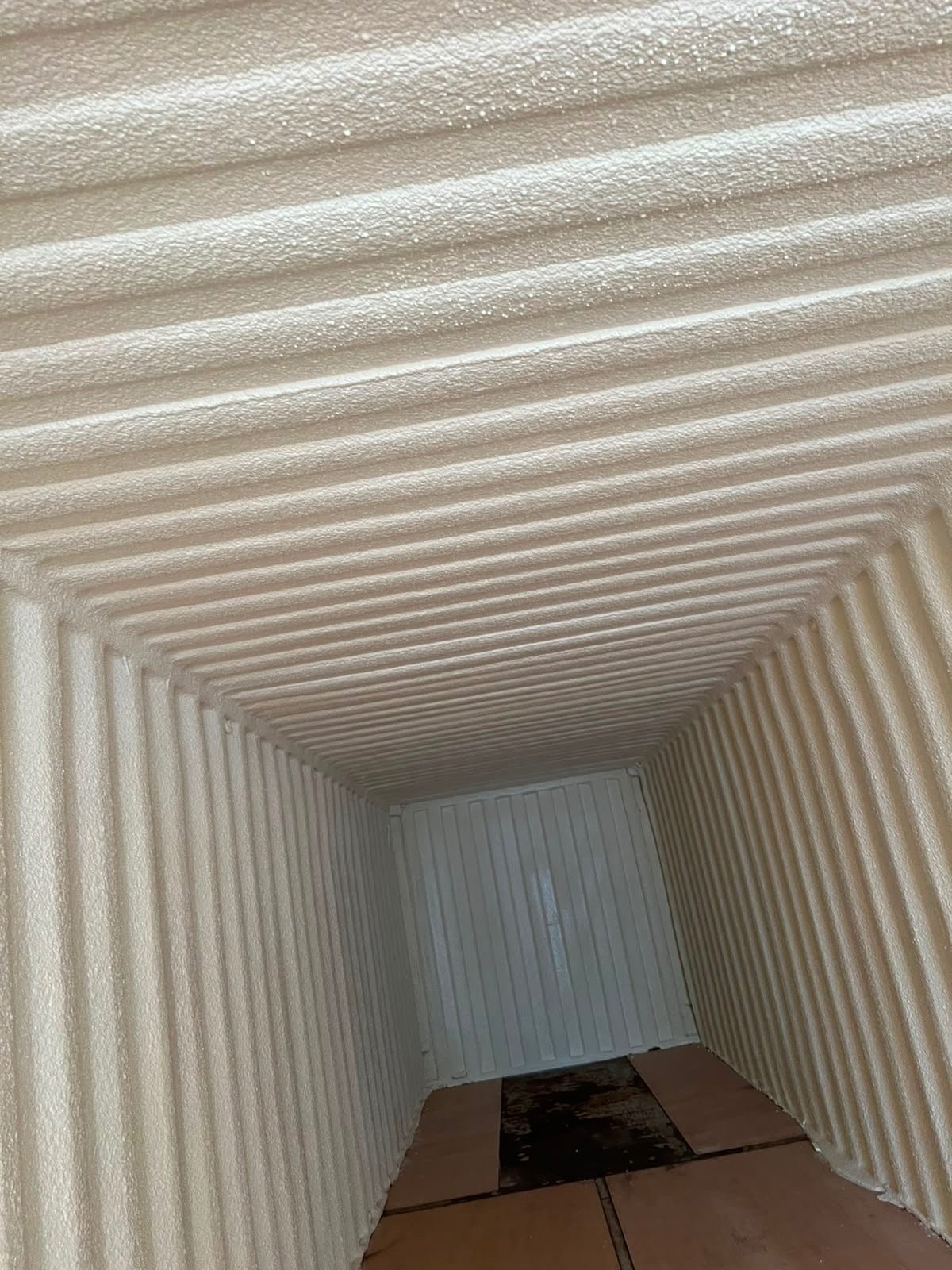
A 40 ft storage container fully encapsulated — walls, ends and ceiling, not just the ceiling — at 25 mm for condensation control. Roughly 115 m² of surface once the corrugation is accounted for, done in a single visit.
See all case studiesAnyone can sell you foam. The parts that decide whether the job is right are the parts around it.
Grade, thickness and set count, derived in front of you rather than handed down as a total. If you disagree with a number you can see exactly which one to argue with.
If the weather window is wrong for closed-cell foam, we will say so and move the date rather than take the order and hope. Foam applied outside its conditions is a warranty claim waiting to happen.
Thickness readings, substrate and ambient conditions, batch numbers and a photo log — the record your warranty rests on, on a sheet you can take straight to site.
Where foam is left exposed, DC315 over the cured foam is the intumescent route. We will specify film thickness against your building’s fire strategy rather than leaving you to work it out.
Building owners who come to us wanting the work done are routed out to contractors on the network — we supply the material, we do not compete with you for the job.
Supplied to trade on account across Ireland and Northern Ireland by Duratite Building Products Limited. Delivery across Ireland — lead time confirmed when you order.
Everything on this page, sourced. Free, no email required.
The thirteen questions contractors and specifiers actually ask us.
Tell us the build-up, the area and the U‑value you have to hit. We’ll tell you which Purios foam, at what thickness, and how many sets — free, before you spend anything.
Free survey and fixed written specification in every county, installed through our approved installer network. Choose your area.
Tell us about your building and we’ll recommend the right system — foam, waterproofing or both — surveyed, specified and quoted at no cost.