Insulation that is sprayed, not fixed. Nexseal expands into every profile, rib and awkward junction and bonds to the deck as it cures — no fixings through the roof, no rails bridging the insulation, no gaps for air to move through. Two grades: Nexseal 2.0 for thin lifts, Nexseal LE for deep builds.
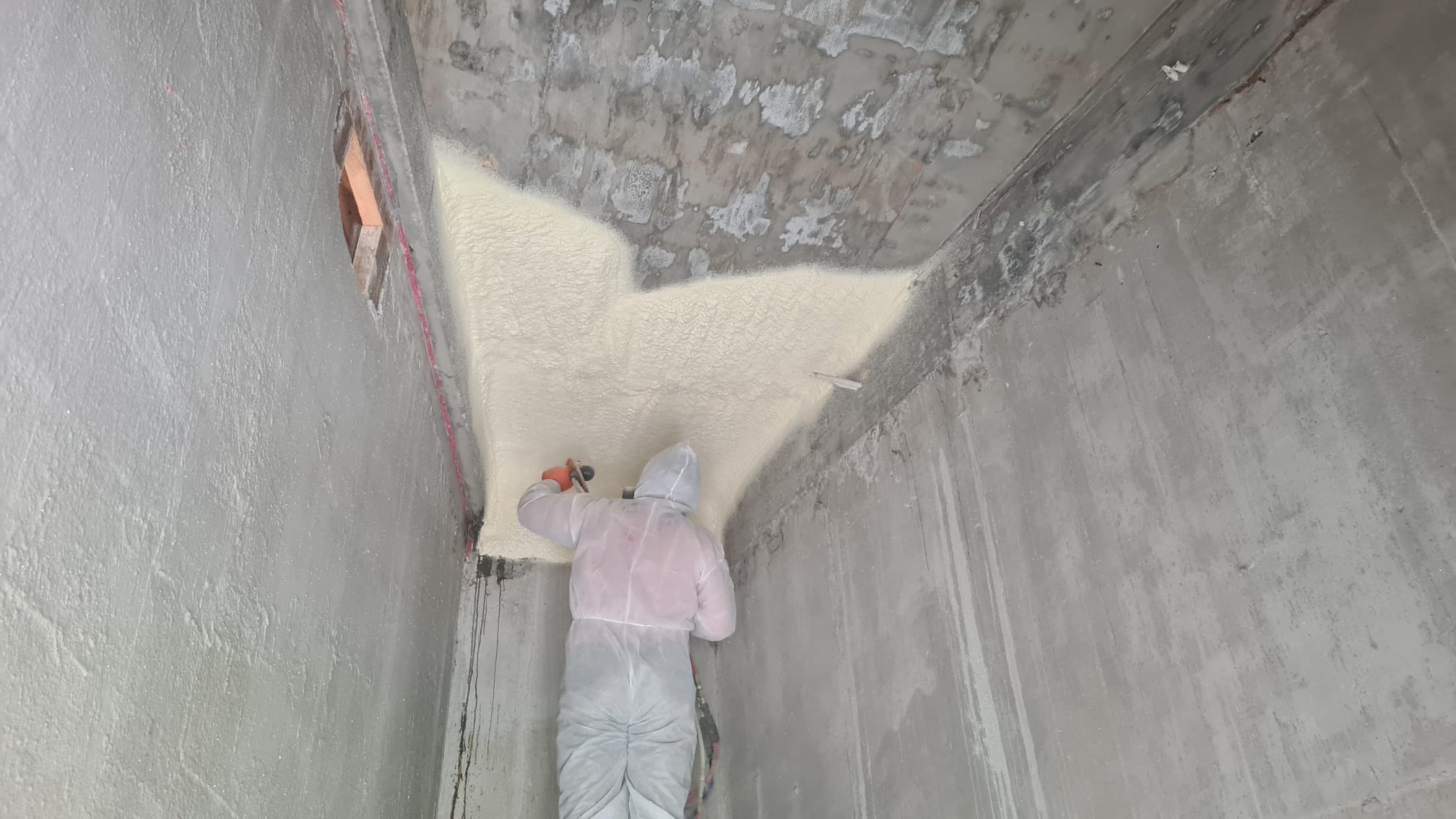 Closed-cell, spray-applied
Same closed-cell foam. The grade you want depends on how thick you are going.
The thin-lift grade. Where the job is about stopping condensation on a cold metal deck rather than hitting a U‑value, you are spraying 25–40 mm and you want a controlled, even build.
The thermal-upgrade grade, and the one most commercial specifications land on. Low‑exothermic, so it can be built up in deep passes without the heat problems that limit ordinary closed‑cell foam.
Real Duratite projects — the jobs closed-cell gets specified for when boards and quilts cannot do it.
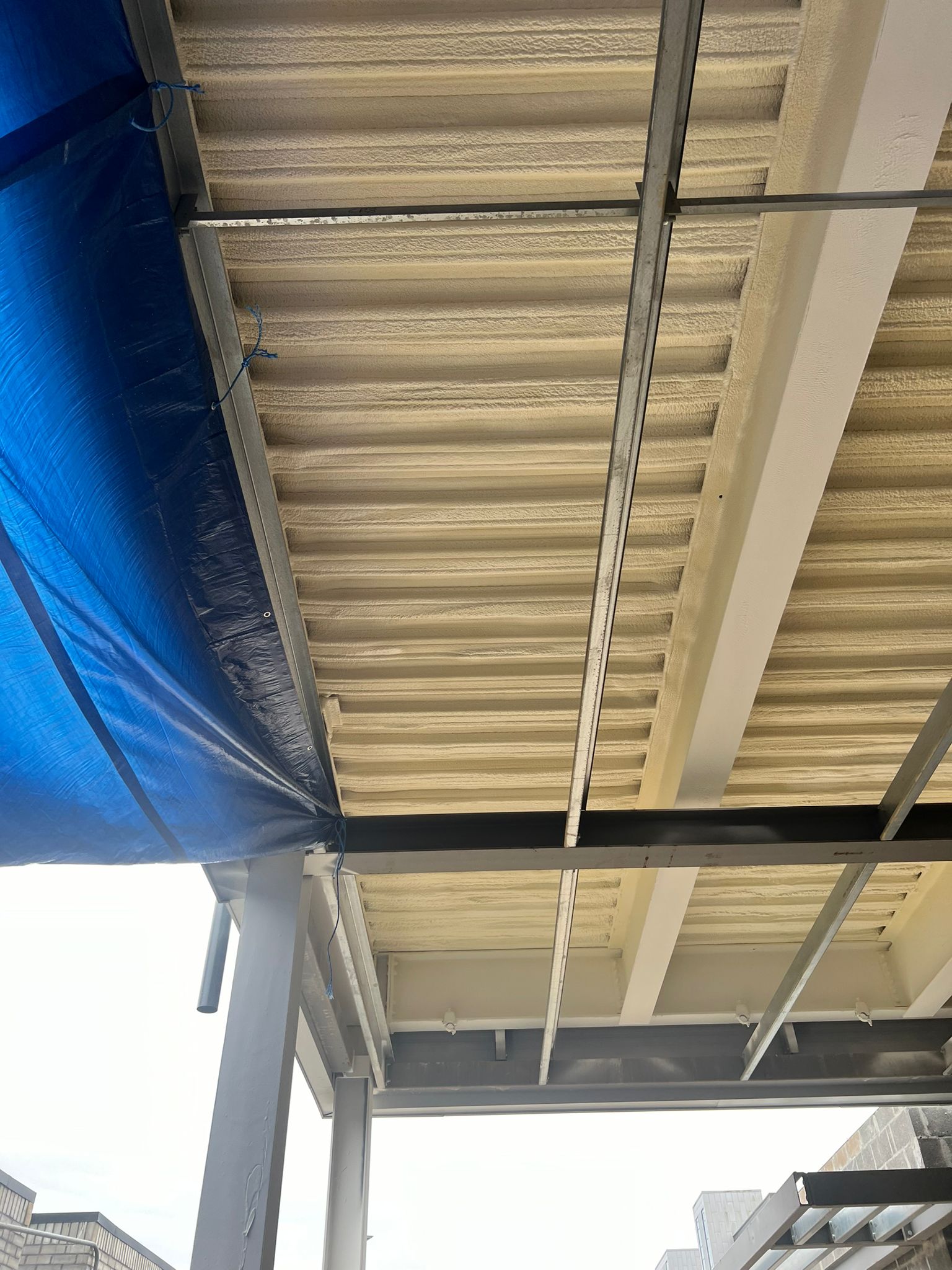
Sprayed straight onto the underside. It fills every rib and follows the profile, so there is no void behind the insulation for warm air to reach a cold surface and condense.
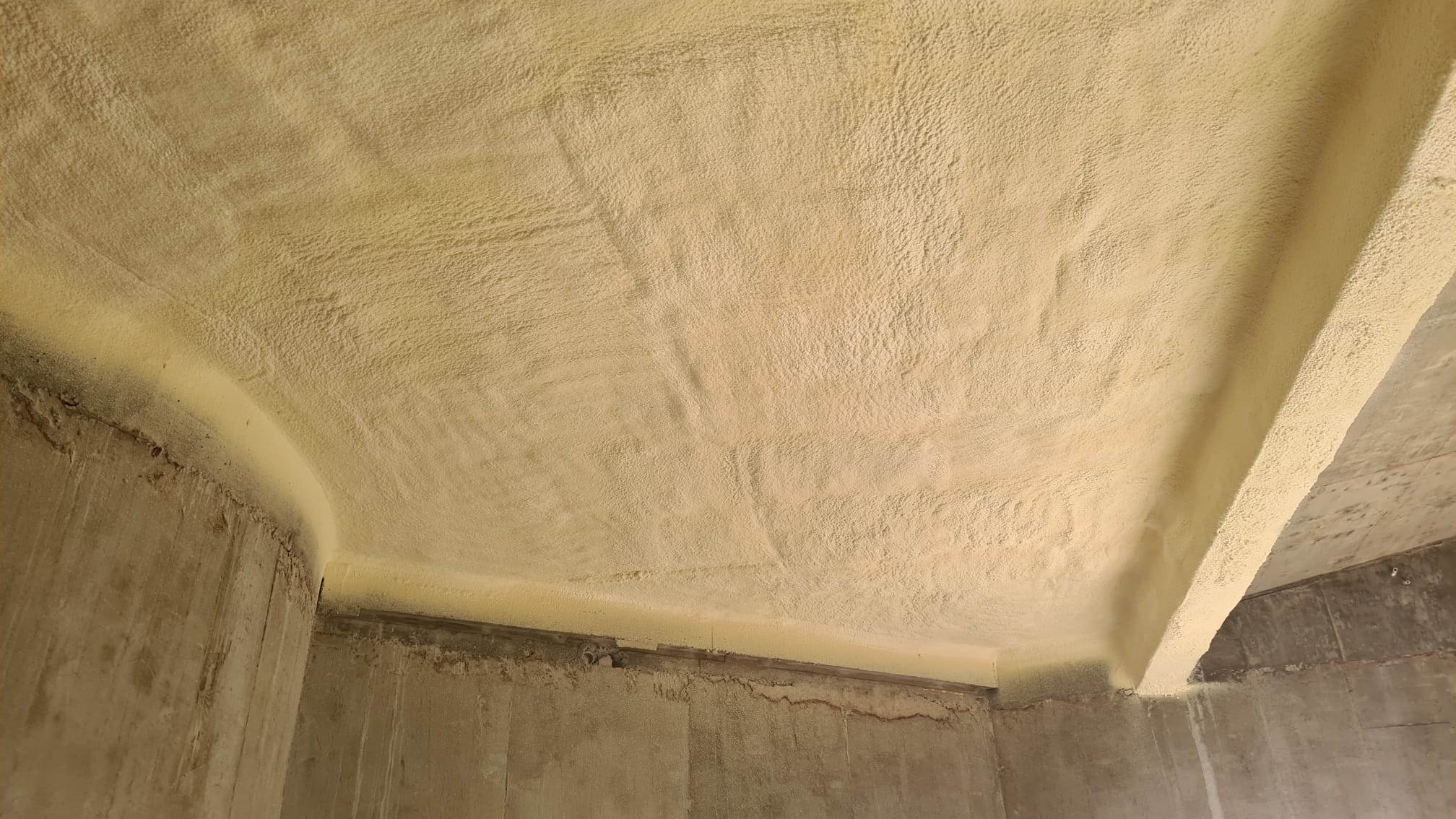
Sprayed direct onto the slab where there is no cavity to fill and no room for a board build-up. It follows the soffit, seals around services, and needs no fixings into the concrete.
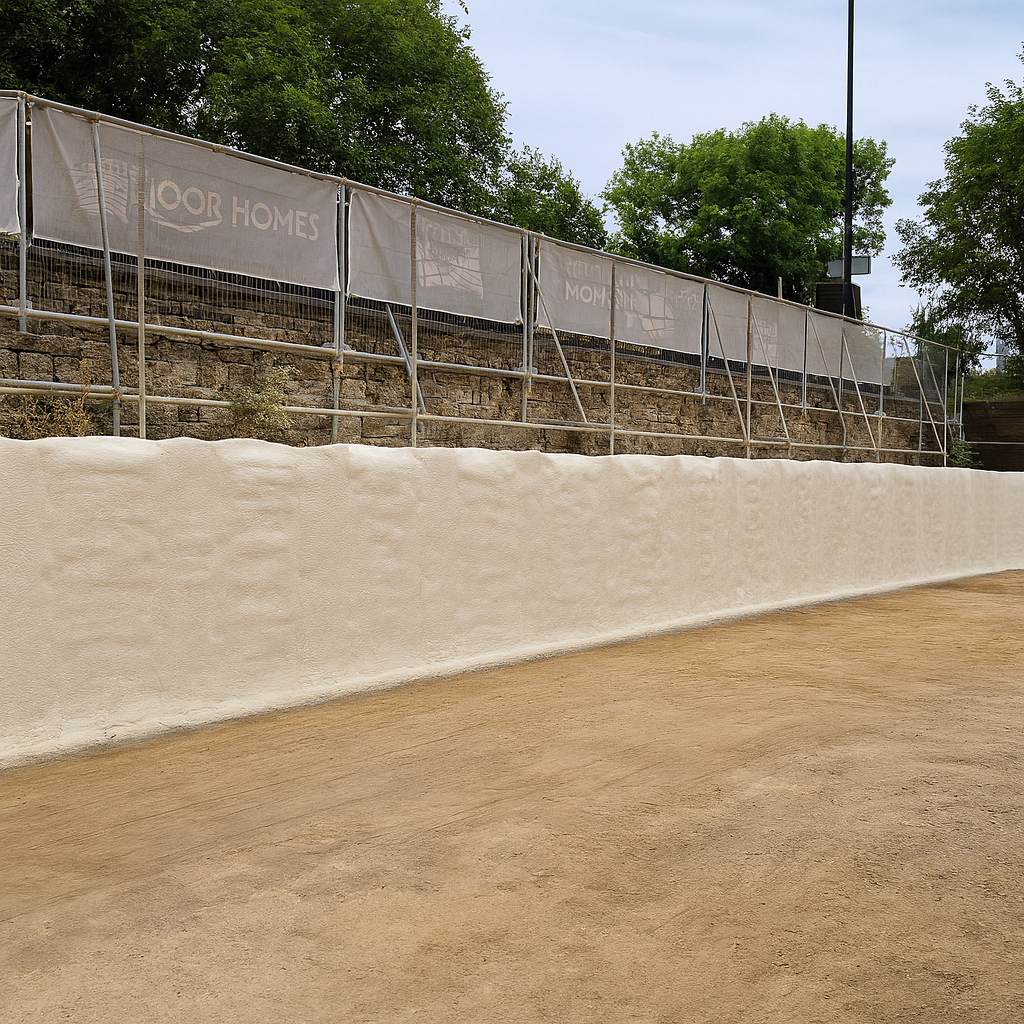
Contiguous and sheet piling infilled with foam instead of shotcrete — lighter, faster, and insulating rather than just filling. Overcoated where it is exposed to UV.
What you actually get that a board or a quilt cannot give you.
It self-bonds as it cures. Nothing penetrates the deck and there are no rails or brackets running cold straight through the insulation line.
The foam is the insulation and the air barrier in one pass. Junctions, laps and service penetrations get sealed by the same material, not by tape and hope.
Closed-cell structure with declared water absorption of 0.41 kg/m² to BS EN 1609, and a vapour resistance factor of µ 62 — which is why it survives on roofs and below ground.
Corrugations, trusses, curved shells, piling voids, plant plinths. Anywhere a rigid board would need cutting, packing and taping, foam just goes on.
Area and thickness in, sets and an indicative U‑value out. Derivation shown — nothing hidden.
Indicative figures for the foam layer over a metal deck. Your target comes from the project’s Part L calculation — send it to us and we will tell you the thickness.
| Nexseal thickness | Indicative U‑value | Typically specified for |
|---|---|---|
| 25 mm | 0.93 W/m²K | Anti-condensation only — not a thermal upgrade |
| 50 mm | 0.50 W/m²K | Condensation control with a useful thermal gain |
| 75 mm | 0.34 W/m²K | Light industrial upgrades, stores, workshops |
| 100 mm | 0.26 W/m²K | The common commercial roof upgrade |
| 125 mm | 0.21 W/m²K | Where the target is tighter than a standard upgrade |
| 150 mm | 0.18 W/m²K | Typical new-build and deep-retrofit roof targets |
| 200 mm | 0.13 W/m²K | Cold stores, low-energy and passive-standard work |
Enverge Nexseal LE, from the manufacturer’s Technical Data Sheet. These are typical published values — the TDS states they will vary and are not part of the product specification.
| Type | Two-component, spray-applied closed-cell polyurethane foam insulation |
| Thermal conductivity (λ, aged) | 0.027 W/m·K at 125 mm — BS EN 14315-1:2013 |
| Compressive behaviour | 78 kPa — BS EN 14315-1:2013 |
| Water vapour resistance | µ 62 — BS EN 12086:2013. Meets one perm or less at 40.6 mm |
| Water absorption | 0.41 kg/m² — BS EN 1609:2013 |
| Dimensional stability | <9% change at 70°C / 90–100% RH; <2% at −20°C — BS EN 1604:2013 |
| Reaction to fire | Class 1 — BS 476 Part 7 |
| Service temperature | −40°C to 82°C (104°C intermittent) |
| Indoor air quality | Low-VOC, compliant with California CDPH Standard 01350 |
| Marking | CE and UKCA marked |
| Yield | Approx. 10,000 m² × mm per set — 100 m² at 100 mm |
| Storage | 10–21°C. Shelf life: A-component 12 months, B-component 6 months |
| Warranty | 25-year manufacturer-backed product warranty, issued by Duratite |
| Manufacturer | Enverge — an Amrize brand, manufactured in Spring, Texas. Duratite supplies approved installers in Ireland and Northern Ireland |
Condensation risk should be assessed to BS 5250:2021; an additional AVCL may be required depending on the build-up. In habitable and occupied spaces an approved thermal barrier over the foam is normally required — check the fire strategy and insurer requirements for the building.
Five stages. The thickness records in stage four are what the warranty rests on.
Substrate, moisture, existing build-up and the target U‑value. This decides grade and thickness.
Clean, dry, sound substrate. Rooflights, services and plant masked off; substrate and ambient temperature and RH logged.
Built up in controlled passes to the specified depth, following the profile of the deck.
Depth gauged and logged, batch numbers captured, photo record taken. No records, no warranty.
Thermal barrier where the fire strategy requires it, or a UV-stable coating where the foam is exposed.
Free, no email required.
TDSEnverge Nexseal LE Data SheetManufacturer technical data — the source of every figure on this page →Spray foam insulationHow the system works and where it is used →Anti-condensation spray foamStopping drips on cold metal decks →All Duratite productsCoatings, sealants and foam — the full rangeSend us the target, the build-up and the area. We’ll come back with the grade, the thickness and the number of sets — free, before you spend anything.
Tell us about your building and we’ll recommend the right system — foam, waterproofing or both — surveyed, specified and quoted at no cost.